|
The
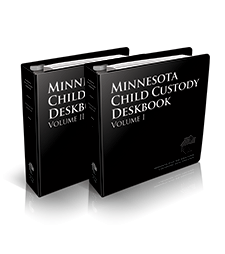
Fourth Edition of the Minnesota Child Custody
Deskbook includes 25 Chapters covering all aspects
of child custody in Minnesota, including: Best Interest
Factors; Preparing, Settling, and Trying a Custody Case;
Child Custody and Child Support Appeals; Third-Party Custody
and Alternative Custodial Arrangements; Custody Modification
and Relocation; Child Support; Medical Support; Alternative
Dispute Resolution; Custody Labels and Parenting Plans; and
Adoption and ART Law. We’ve also added a NEW chapter,
Chapter 25, Domestic Violence in Custody Cases, which
includes two appendices: Appendix A – Client Screening to
Identify Domestic Violence Victimization; and Appendix B –
Domestic Violence Risk Assessment Bench Guide. The Fourth
Edition includes updated case law, including cases from the
United States Supreme Court, the Minnesota Supreme Court,
and the Minnesota Court of Appeals. The Deskbook includes
annually updated chapters covering all aspects of custody
cases, including representing children, interviewing
clients, bonding and attachment issues, managing
high-conflict custody issues, child custody labels and
parenting plan evaluations, a comprehensive overview and
analysis of the new best interest factors, a chapter on
legal recognition of queer families (which includes a look
at both national and state laws and case law), as well as
chapters on paternity issues, interstate and international
jurisdiction, child abuse allegation, and much, much more!
Simply put, the Minnesota Child Custody Deskbook
brings together all the knowledge necessary to be successful
is this dynamic, challenging field. Written with the
practicing attorney in mind, the Deskbook examines all areas
of child custody and support law. Covering everything from
initial client interviews through appeals, and including
more than 50 helpful sample forms, the Minnesota Child
Custody Deskbook is a comprehensive guide to family
law issues involving children. Written by experienced
judges, attorneys, guardians, mediators, psychologists, and
professors, it offers every perspective on issues of child
custody and support. Discussions of motion practice sit
alongside thorough analyses of attachment issues within
families, with the text enhanced throughout by Minnesota
CLE’s trademark practice tips, ethical considerations, and
informative appendices with checklists and additional
resources.
| TABLE OF CONTENTS |
| Chapter 1: |
History and Introduction |
| Chapter 2: |
Psychological Issues and Trends in Custody Cases |
| Chapter 3: |
Bonding and Attachment Issues |
| Chapter 4: |
Interviewing the Client |
| Chapter 5: |
Temporary Proceedings and Motion Practice |
| Chapter 6: |
Guardians Ad Litem in Custody Cases |
| Chapter 7: |
Best Interest Factors |
| Chapter 8: |
Preparing, Settling and Trying a Custody Case |
| Chapter 9: |
Child Custody and Child Support Appeals |
| Chapter 10: |
Tribal Court Practice,
ICWA and MIFPA in Minnesota Custody and Child Support Cases |
| Chapter 11: |
Representing Children |
| Chapter 12: |
Third-Party Custody and Alternative Custodial Arrangements |
| Chapter 13: |
Management of a High-Conflict Custody Issues |
| Chapter 14: |
Custody Modification and Relocation in Minnesota |
| Chapter 15: |
Child Support |
| Chapter 16: |
Medical Support |
| Chapter 17: |
Paternity Issues and Trends |
| Chapter 18: |
Child Custody and Parenting
Time Evaluations |
| Chapter 19: |
Alternative Dispute Resolution |
| Chapter 20: |
Legal Recognition of Queer Families
|
| Chapter 21: |
Interstate and International Jurisdiction |
| Chapter 22: |
Child Abuse Allegations in Custody Cases |
| Chapter 23: |
Custody Labels and Parenting Plans: Requirements, Consequences and Options |
| Chapter 24: |
Adoption and ART Law: Creating Families by Traditional and Non-Traditional Means
|
| Chapter 25: |
Domestic Violence in
Custody Cases |
| Table of Authorities |
| Subject Index |
|
|